

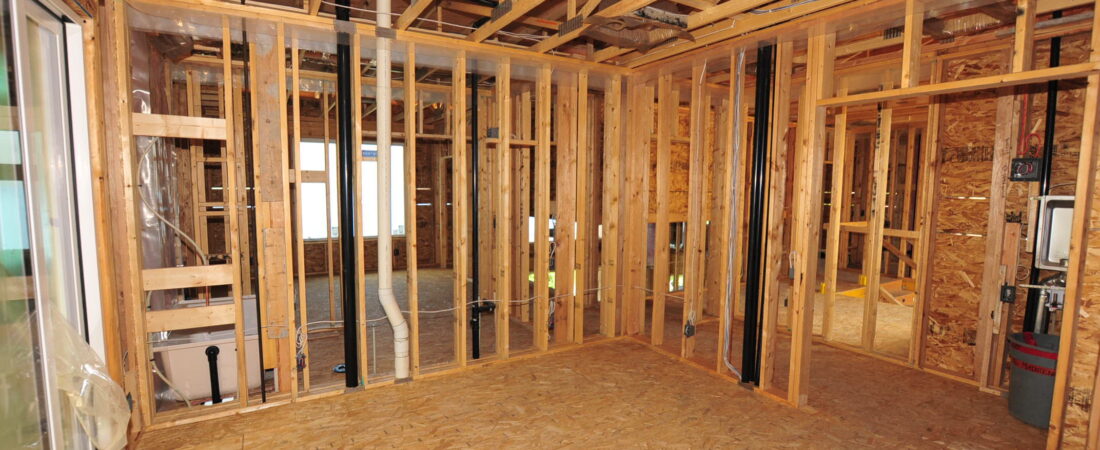
What You Don’t See Matters: The Details Behind a Well-Built Home
When you walk into a finished custom home, it’s natural to notice what you can see.
The cabinetry. The flooring. The lighting. The countertops. The way natural light fills a room or how perfectly a space frames the view.
But some of the most important details in a home are the ones you’ll never see once construction is complete.
Behind the drywall, beneath the finishes and throughout the structure are hundreds of decisions that influence how a home performs, feels and stands the test of time. And while these details may never make it into the final photographs, they are every bit as important as the ones that do.
A Beautiful Home Starts Behind the Walls
Great finishes can make a home beautiful. Great construction is what gives that beauty a foundation.
Long before cabinetry is installed or paint colours are chosen, careful attention is being given to the structure, building envelope, insulation, waterproofing and countless other components that eventually disappear from view.
These stages of construction may not be the most glamorous but getting them right is essential.
Thoughtful planning and quality workmanship at every stage help create a home that doesn’t just look exceptional on move-in day but continues to perform well for years to come.
Comfort Is Designed into the Home
Some of the best features of a well-built home are things you don’t consciously notice.
Rooms feel comfortable. Temperatures remain consistent. The home feels quiet. Fresh air moves throughout the space. Everything simply works the way it should.
Achieving that level of comfort requires much more than choosing the right thermostat.
Insulation, windows, heating and cooling systems, ventilation and the building envelope all work together. Considering these elements as part of the overall design and construction process allows the home to function as one complete system rather than a collection of individual parts.
Planning Makes a Difference
There are hundreds of decisions involved in building a custom home, and many of them need to happen well before they become visible on site.
Where will plumbing run? How will mechanical systems integrate with the architecture? Where will lighting, technology and electrical components be located? How will everything come together without compromising the design?
Good planning allows these details to be considered early.
This is one of the advantages of an integrated design-build process. When design and construction are considered together from the beginning, potential challenges can be addressed before they become problems in the field.
The result is a home where what happens behind the walls supports what you ultimately see in the finished space.
Quality Is Often Found in the Details
Building well isn’t always about one major decision.
More often, it’s the accumulation of hundreds of smaller ones.
It’s taking the time to think through how materials come together. It’s coordinating trades so that each stage of construction supports the next. It’s paying attention when something will eventually be covered up and no one would know the difference.
Because ultimately, someone will know the difference: the homeowner.
Maybe not immediately, and maybe not because they can point to one particular detail. They’ll experience it in a home that feels comfortable, functions properly and continues to perform as intended.
Building for the Long Term
A custom home is a significant investment, and the decisions made during construction shouldn’t only be about how the home will look when the keys are handed over.
They should consider how it will live five, ten and twenty years from now.
That means thinking about durability, efficiency, maintenance and performance alongside architecture and interior design. It means selecting materials and building methods for more than appearance alone. And it means recognizing that some of the most valuable investments in a home may never be visible.
At Bellamy Homes, we believe the same level of care that goes into the spaces you see should go into everything you don’t.
Because a well-built home isn’t defined only by how beautiful it looks.
It’s defined by how well it was built from the beginning.